[ 2025-2026 ]
ElfieResearch
A patient-centric B2B clinical-research platform
[ target ]
Design an end-to-end trial platform across 6 distinct personas, reframing electronic consent from a legal formality into an interactive learning experience.
[ Constraints ]
Audit trail was a design constraint from day one.
-

Regulatory
21 CFR Part 11, HIPAA, GDPR—every action fully auditable.
-

Trust
Consent and health data require calm, legible interface. Flashy is a liability.
-

Personas
One system serving 6 roles with opposed needs: Study Manager, CRA, Data Manager, Investigator, Participant, and Sponsor.


[ reframe from insights ]
While most platforms optimize for sponsors, we realized that a great participant experience is what actually drives retention.
This reframed the entire brief.
Instead of starting with the admin console, we focused on where trials usually break down: onboarding. That made eConsent the natural starting point—not just as a legal signature to collect, but as an accessible first impression and a crucial comprehension test.
[ scope ]
-
385
screens across console, participant app and responsive web
-
24
component sets, one library for three surfaces
-
6 x 7
roles against classes of data, least privilege on every cell

-
3
compliance regimes designed against
[ Key Decisions ][ System ]
Draw the permission model before the screens
Mapping six roles against seven classes of data made the overlap visible: the roles differ in the depth of their access, not in the objects they touch. Per-role applications would duplicate one data model rather than specialise it.

[ Key Decisions ][ the builder ]
Design the builder, not the form
Protocol amendments force re-consent, and every version of every form has to stay retrievable for audit. So the deliverable was the tool that makes the form. One primitive carries four modules: participant identification, screening, eConsent and withdrawal.

[ Key Decisions ][ the builder at work • screening ]
Branch the screening, not the study
Eligibility is routed per answer, in sentences a coordinator can read: if greater than 18, go to Q2. Every unhandled case falls to a named ending screen, so no participant can leave the flow undecided.

[ Key Decisions ][ econsent ]
Turn consent into comprehension
Consent was scoped as a legal formality. FDA guidance on decentralised trials treats the eConsent system as where understanding is established, not only recorded. We argued for building the participant surface before the console, starting with consent.


[ Key Decisions ][ Retention ]
Design for the participant who is alone
A decentralised participant has no waiting room and no nurse. Isolation drives dropout, and the control arm receives least by design. Reminders, visible progress and streak mechanics are configurable per arm; recruitment is drawn as four separately tracked sources.


[ Key Decisions ][ the states ]
Design the states nobody demos
A regulated product is judged on the paths a demo skips. Each of these exists as a designed screen in the file, not as a note for engineering.
-
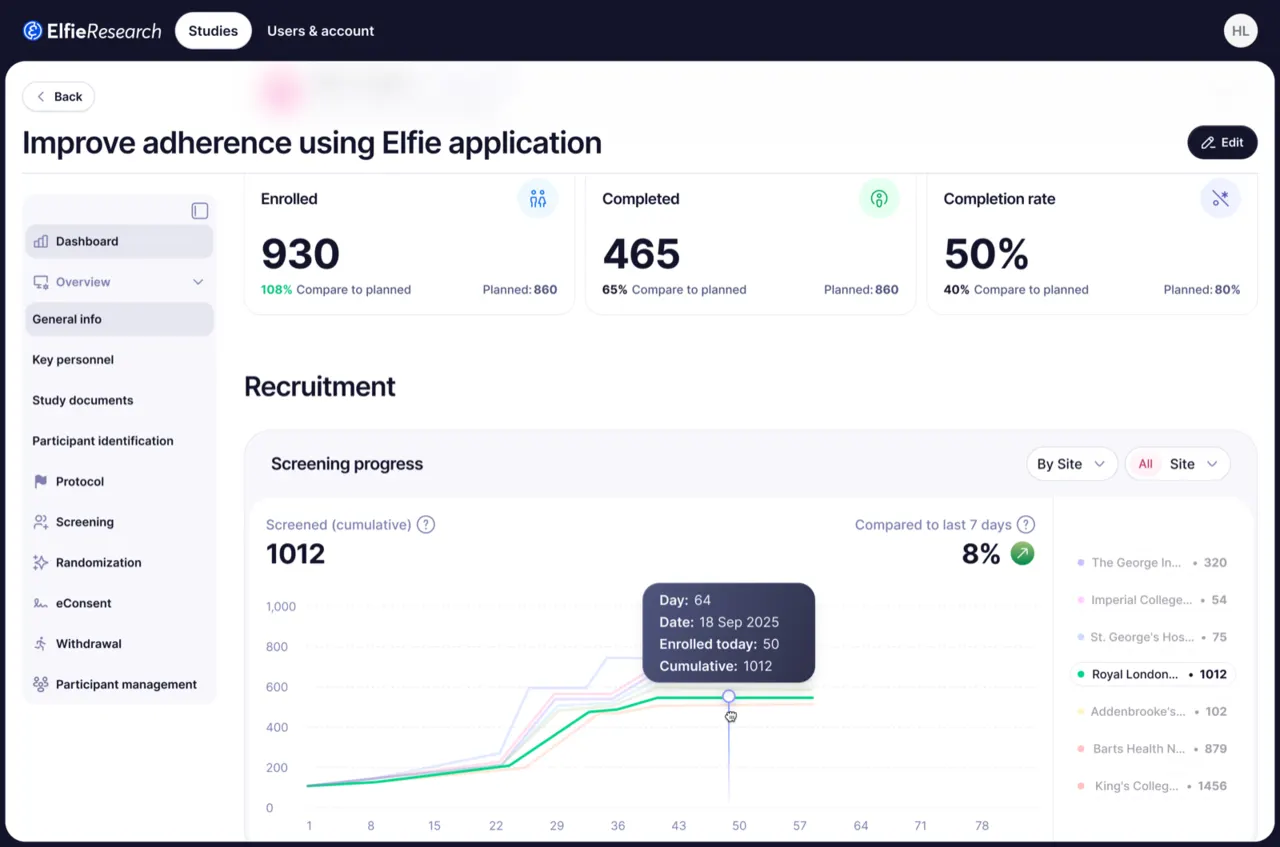
[ read-only ]
Dashboard of a study
-
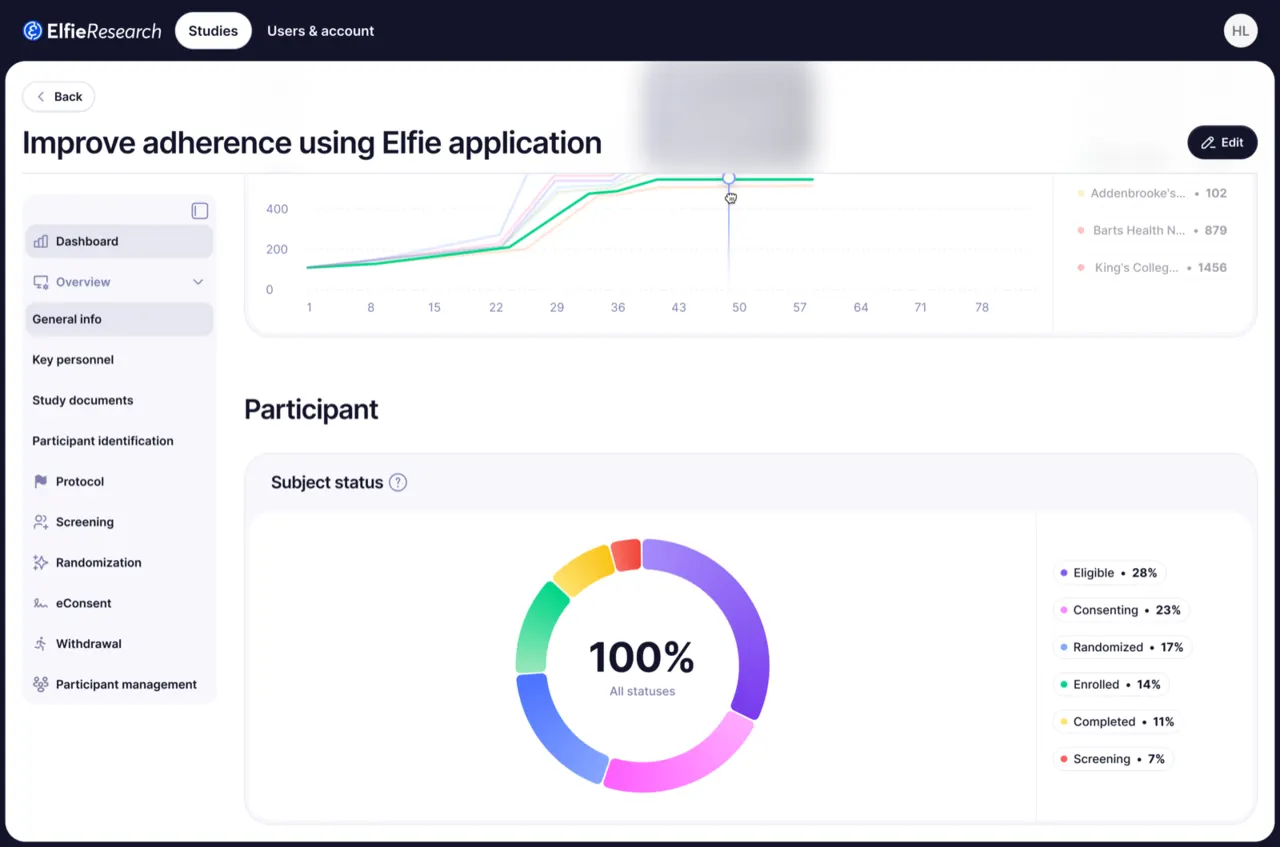
[ read-only ]
Dashboard of a study
-
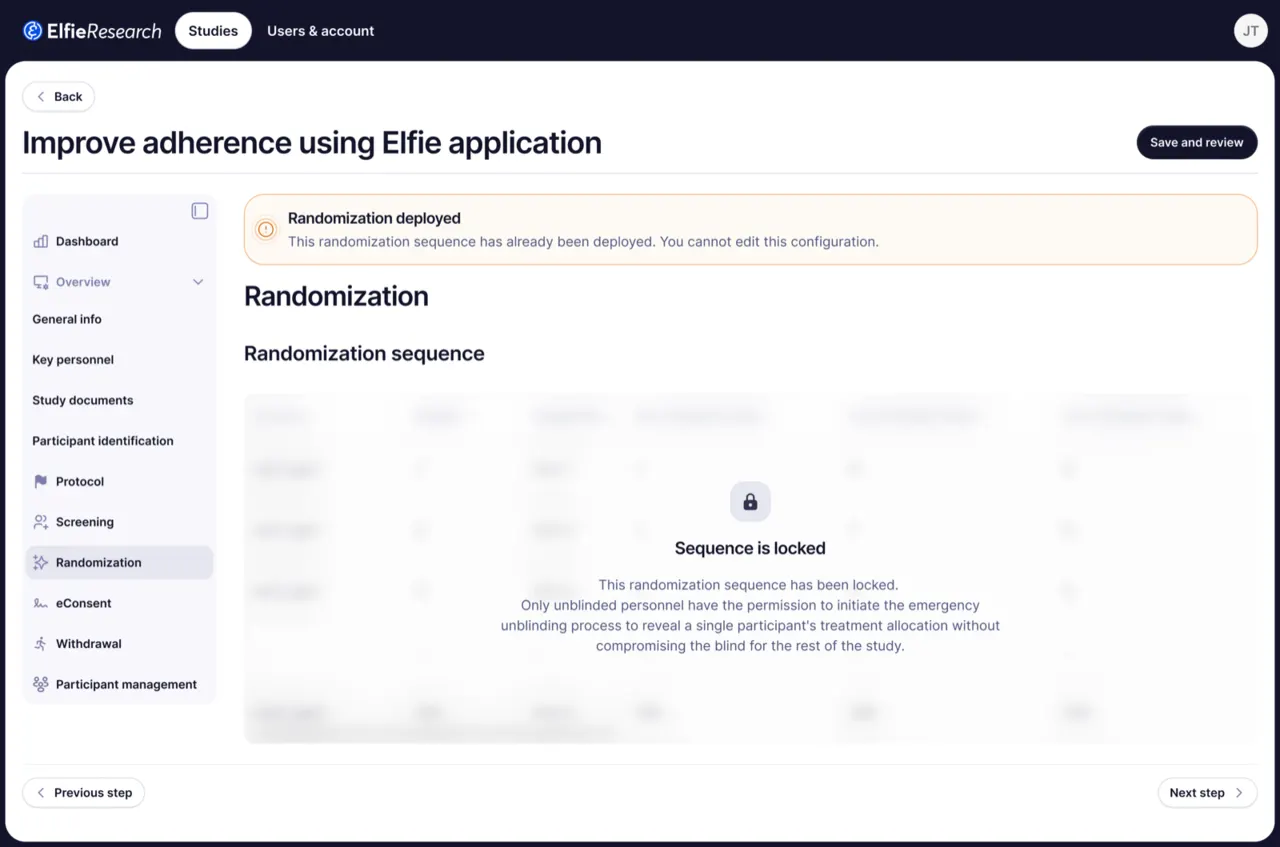
[ Blinding ]
Once deployed, the randomisation sequence locks; only unblinded personnel can start emergency unblinding for a single participant.
-
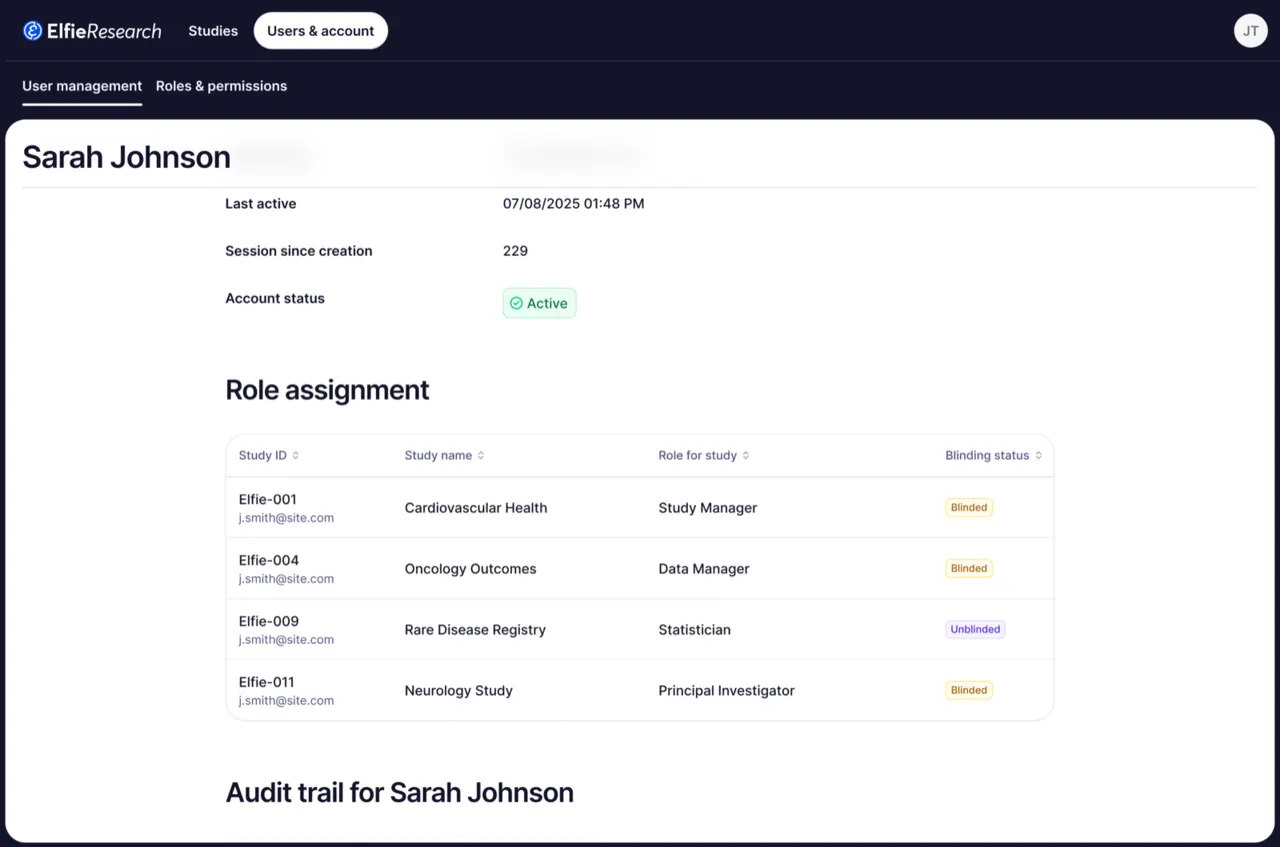
[ Read-only ]
Platform admin, associate and user each get a rendered read-only variant, not a disabled editor.
-
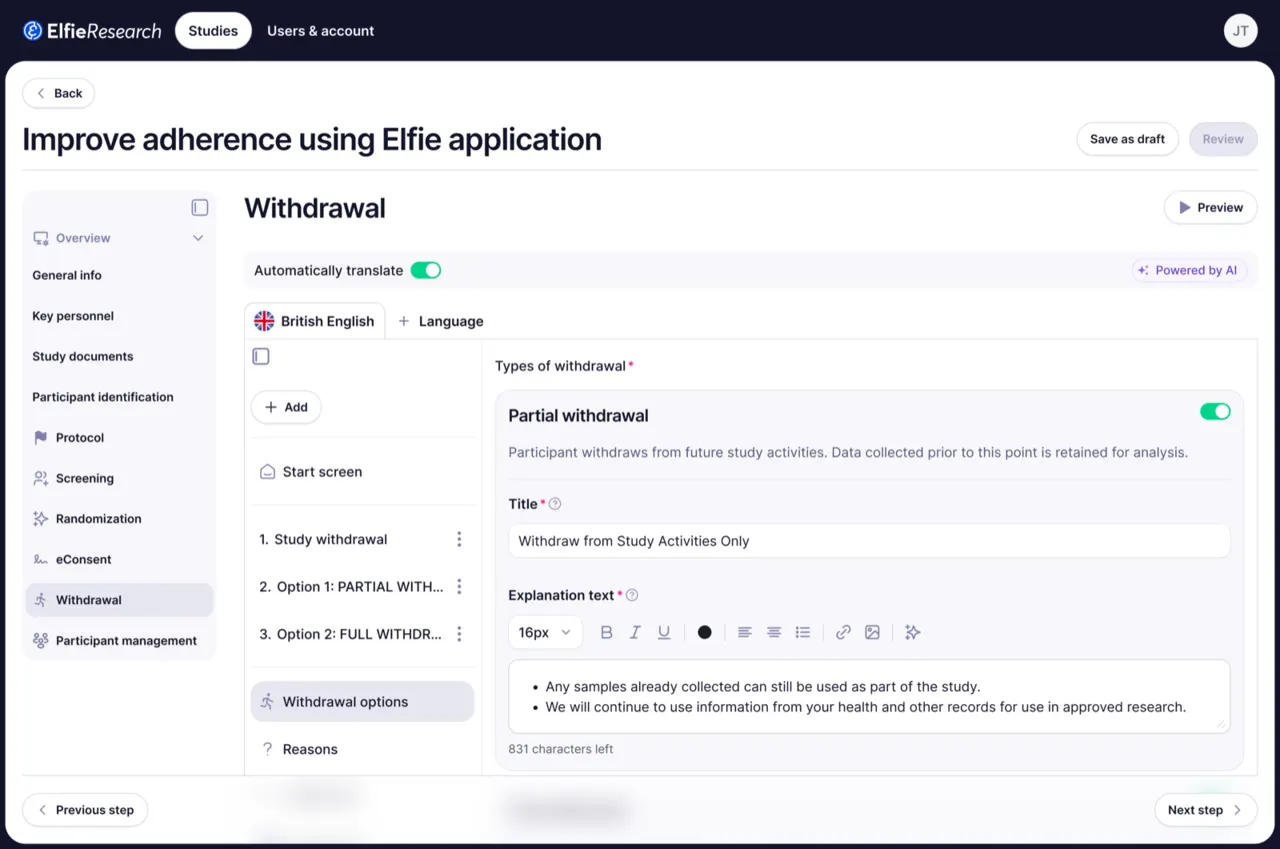
[ Withdrawal ]
Partial versus full withdrawal, each with a data-retention policy: retain per ICH-GCP, or erase under GDPR.
-
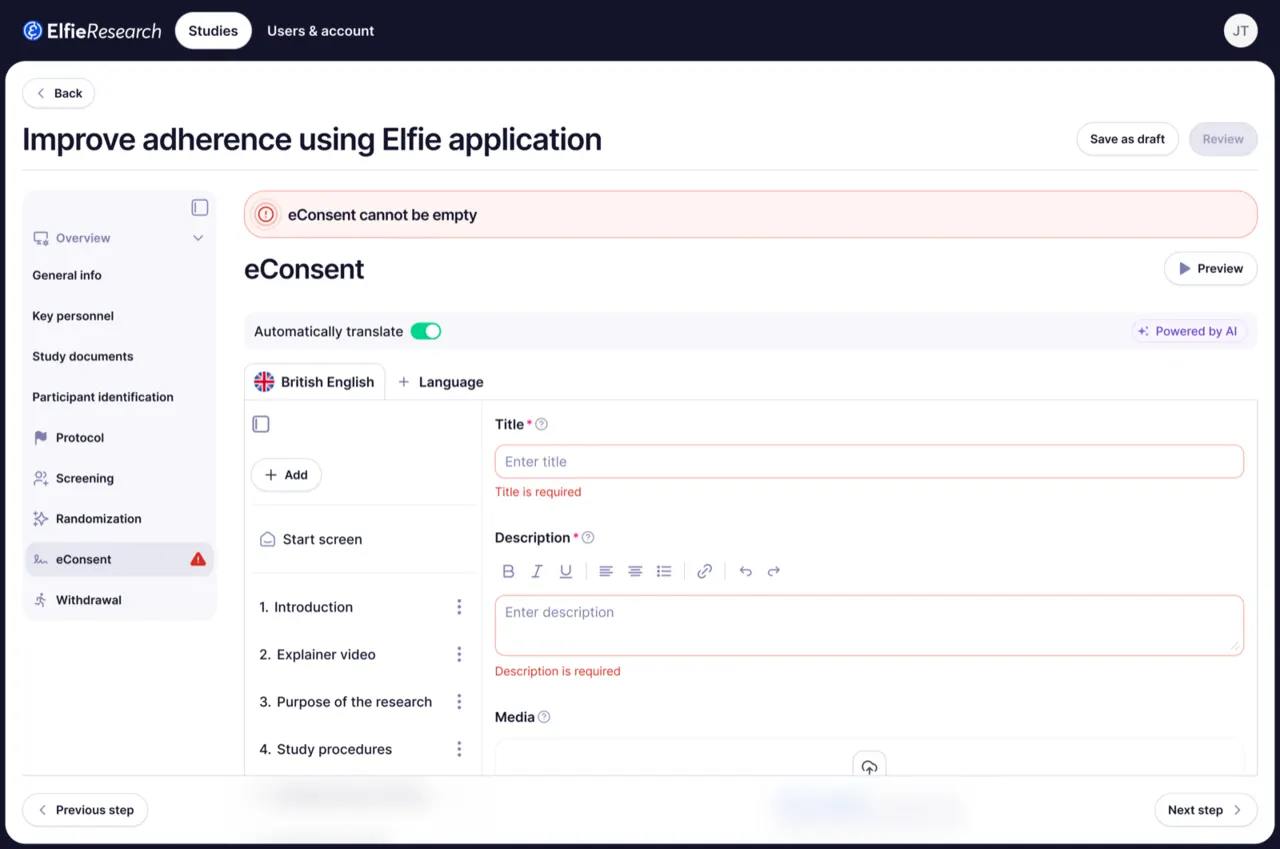
[ Empty · error ]
Empty protocol, search with no results, incorrect data format, filter overflow, collapsed side nav.
-
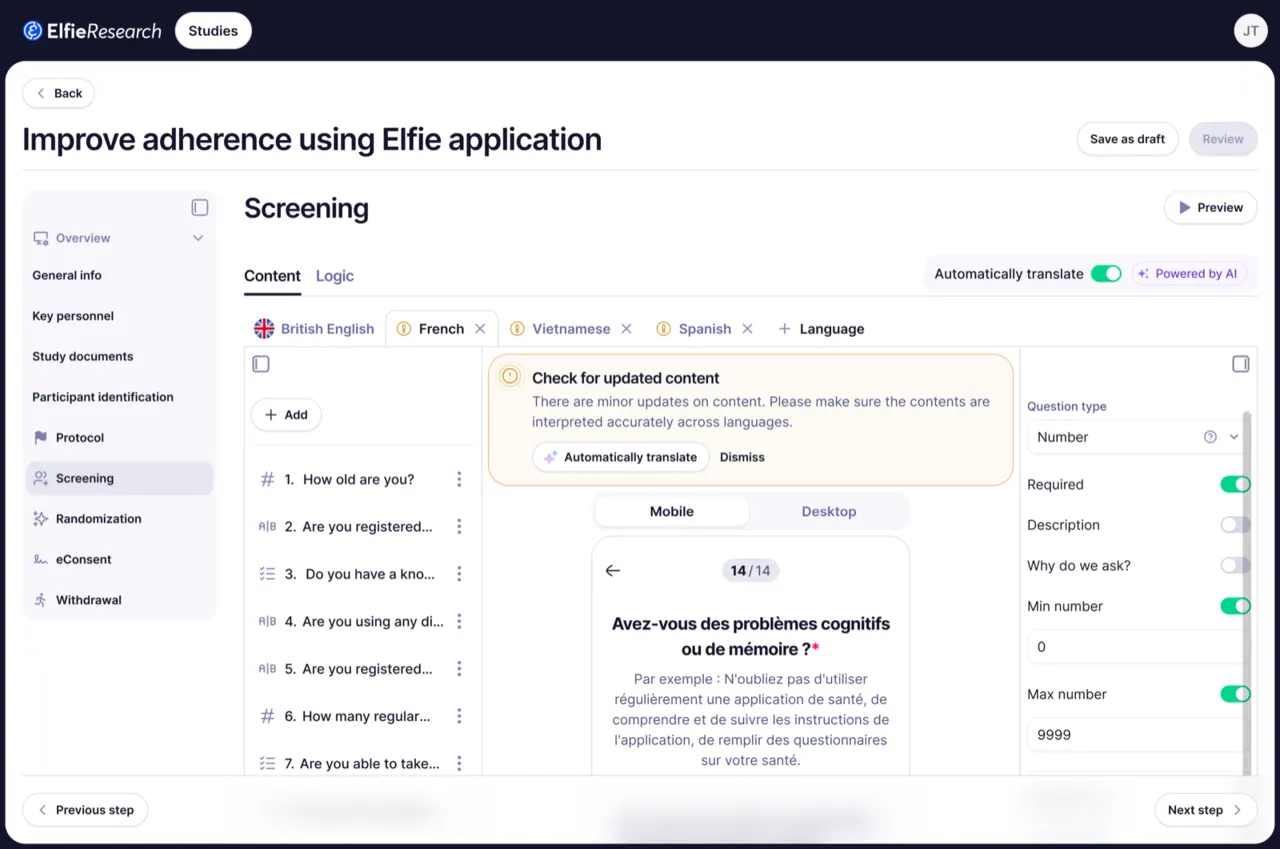
[ Empty · error ]
Empty protocol, search with no results, incorrect data format, filter overflow, collapsed side nav.
-
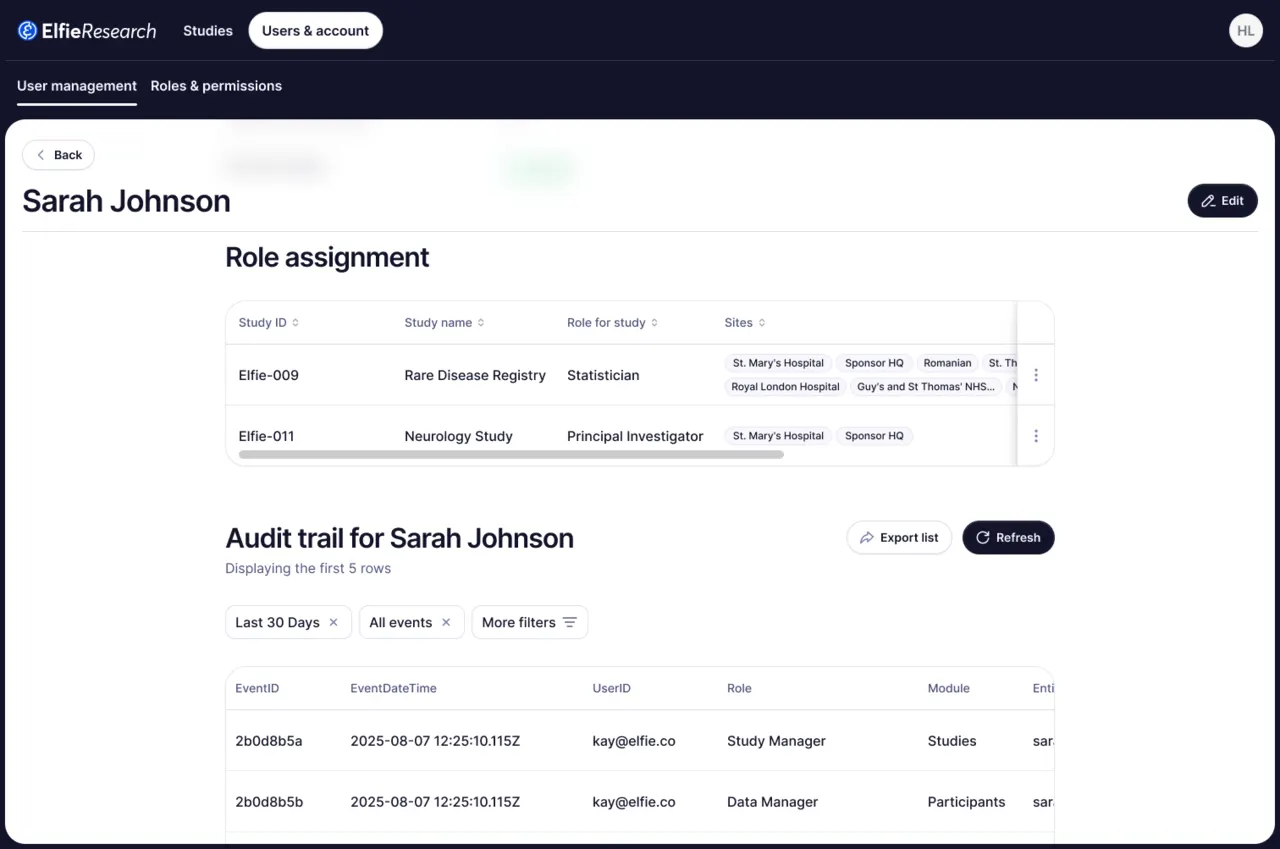
[ Audit trail ]
An audit-trail header on every record: last saved, by whom, at what time.
-
[ Withdrawal ]
Partial versus full withdrawal, each with a data-retention policy: retain per ICH-GCP, or erase under GDPR.
-
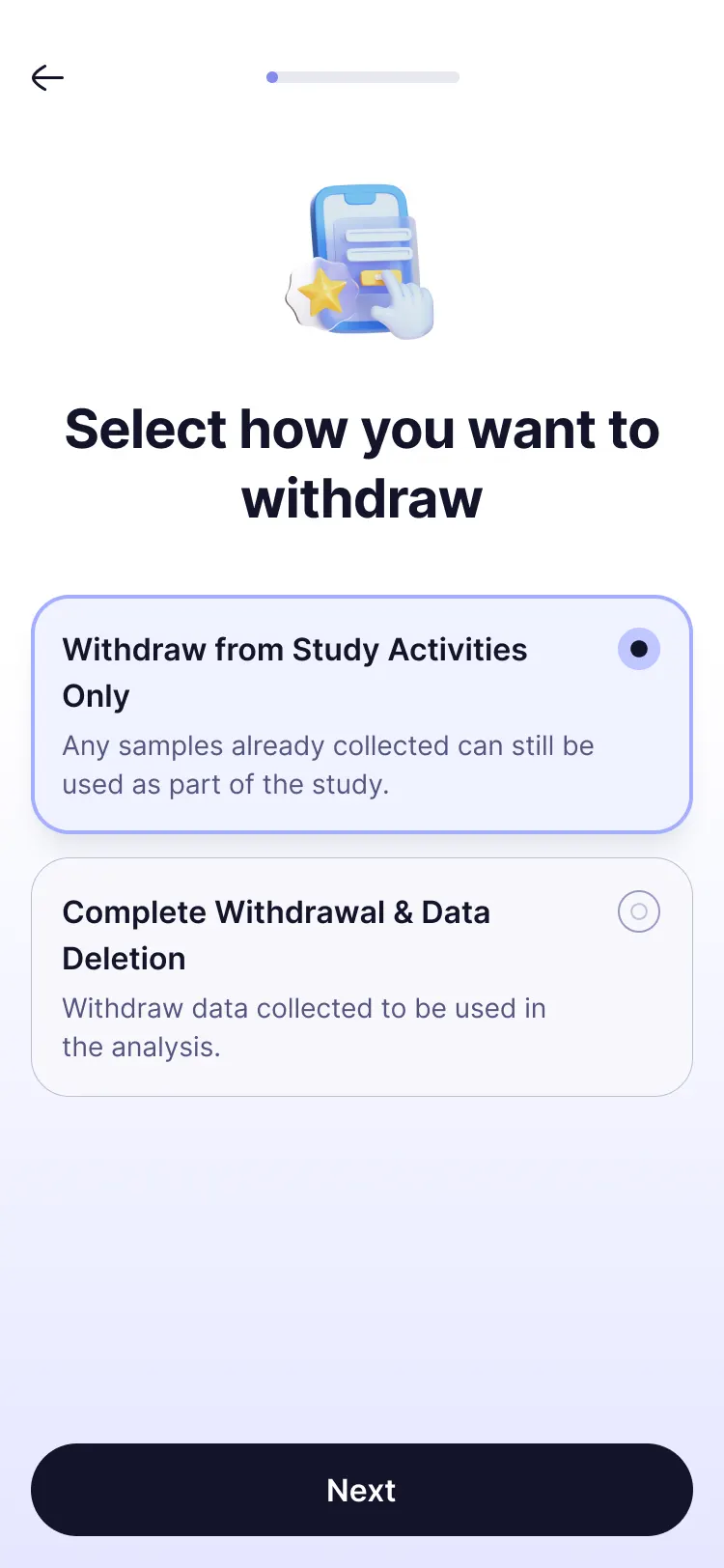
[ Withdrawal ]
Partial versus full withdrawal, each with a data-retention policy: retain per ICH-GCP, or erase under GDPR.


[ outcome ]
Complete multi-platform flows (console, web, mobile) in just 1 month from the initial PRD publication.
eConsent (End-to-end flows for electronic consent); ePRO / eCOA (Electronic patient-reported outcomes) ; Patient Recruitment (Landing page + pre-screening / eligibility flow); Console (Role-based web console used by trial staff.)

[ reflection ]
Positioning eConsent as a critical retention lever did more than improve the user experience - It anchored our design strategy directly to business KPIs, ensuring design and product were finally speaking the same language.